 By admin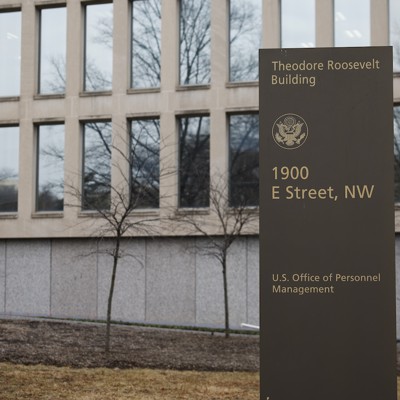
The Office of Personnel Management this week finalized new regulations granting the agency the power to remove federal workers across government over issues of suitability or misconduct, as the Trump administration launches a new phase in its quest to sidestep decades-old civil service protections.
Read more IRS agrees to stop stealing workers’ pro-union decorations
For decades, OPM has had the authority to rule out federal job applicants over conduct that may make them unsuitable for public service. But once someone has been hired—and completed a one-year probationary period—individual agencies have been responsible for addressing misconduct using the same procedures as they employ to remove poor performers, known as Chapter 75 procedures, which include avenues for the impacted employee to appeal to the Merit Systems Protection Board.
But last year, President Trump issued a memo instructing OPM to create a system by which the HR agency can remove employees for “post-appointment” conduct, outside of the strictures of Chapter 75. In a final rule published in the Federal Register Tuesday, OPM said going forward, both it and employing agencies may take a suitability action to remove a federal worker for alleged misconduct.
“Despite the clear intent from both Congress and the president—stretching over decades now—that agencies should not rely on Chapter 75 procedures to address post-appointment conduct covered by the factors described in [the suitability regulation], today agencies still largely must rely on Chapter 75 procedures to remove employees who engage in serious misconduct,” OPM wrote. “This means that, illogically, the government has far greater ability to bar someone from federal employment who has committed a serious crime or misconduct in the past than it does to remove someone who engages in the exact same behavior as a federal employee.”
While MSPB still has jurisdiction over appeals to suitability determinations, OPM earlier this year proposed additional regulations that would bring those appeals in-house to OPM for adjudication. The suitability regulations are set to take effect July 30; the plan to move of some employee appeals to OPM has yet to be finalized.
This week’s rule also expands the range of conduct that may attract a suitability determination to include: failure to comply with legal obligations, including the “timely” filing of tax returns; refusal to sign a non-disclosure agreement or a violation of an in-effect NDA; and theft, misuse or “negligent loss” of government resources or equipment.
Jenny Mattingly, vice president of policy and stakeholder engagement for the Partnership for Public Service, highlighted how the administration has spread pieces of its campaign to reduce the federal workforce’s civil service protections across an array of regulatory and policy changes. Complementing the addition of NDA provisions to the list of reasons for a suitability determination is OPM’s push to issue a standardized governmentwide NDA for federal workers, which critics have assailed as an attempt to chill whistleblower activity and curb employees’ constitutionally protected speech. And Republicans on the House Oversight and Reform Committee announced last week that the panel would begin investigating tax delinquency among federal workers.
Read more Judge halts Trump administration effort to exert political control over union elections
“These new criteria are very broad in some respects, and open to interpretation,” she said. “And then, when you put the determinations of what those interpretations are into the hands of the political head of an agency, our concern is that it makes it easier to politicize the removal of federal employees . . . It really centralizes everything under OPM in a way that hasn’t been done before.”
Dan Meyer, a partner at Tully Rinckey PLLC, a law firm specializing in federal employment law, said this regulation, taken in concert with the Trump administration’s other civil service policies, amount to an effort to rebuild President Nixon’s political control of the workforce prior to the enactment of the 1978 Civil Service Reform Act.
“This is a pretty aggressive agenda to roll back the Civil Service Reform Act,” he said. “[This] is what this is trying to do: to bring back centralized control . . . This administration is as if Nixon got three terms: all the agenda items from 1969 through 1971 are moving forward. That’s why [Arthur] Schlesinger called it ‘The Imperial Presidency,’ because of the centralization of power.”
And Mattingly said that even setting aside her organization’s policy concerns, it remains an open question as to whether OPM can handle all of its new authority.
“At this point there are multiple appeals processes—not just suitability—that are being pulled into OPM,” she said. “The question we keep raising is: does OPM even have the capacity or the capability to handle these types of things? It’s unclear whether OPM has the budget, the people or the skillsets to actually manage all of these things.”
Read more Some TSP funds faltered in June