 By admin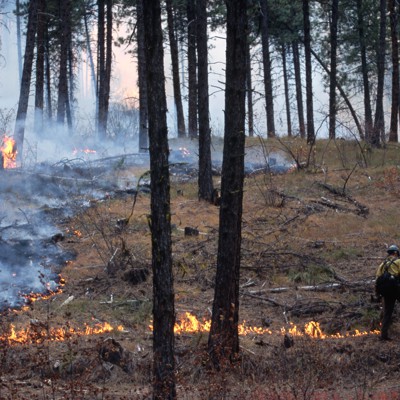
Federal wildland firefighters will soon have more opportunities to receive hazard pay in connection with their work fighting and preventing wildfires, thanks to newly finalized regulations from the Office of Personnel Management.
Read more State’s overseas housing rules haven’t kept up with the times, GAO says
Currently, federal firefighters are eligible for hazard pay—a 25% increase over their normal salary—only when working to extinguish an unplanned wildfire. But they do not receive this increased pay when working on prescribed burns, in which officials intentionally ignite decaying forest material in the hopes of mitigating the risk of an uncontrolled wildfire breaking out in the future.
In a published in the Federal Register Friday, OPM finalized its April proposal to expand firefighters’ access to hazard pay to include prescribed burns, effective Sept. 13. The regulation authorizes hazardous duty pay for prescribed burns for firefighters hired under the General Schedule pay sale, as well as environmental differential pay for those serving under the Federal Wage System.
But OPM noted that the new hazard pay will not be available for every activity associated with a prescribed burn.
“As in the proposed rule, the final rule limits differential coverage to employees participating as a member of a firefighting crew engaged in activities on the fireline directly involving the implementation and control of a prescribed wildland fire,” OPM wrote. “The rule does not extend the differential to pre-ignition preparation activities. OPM retains this limitation because the hazards justifying coverage are associated with the active fire environment and its immediate aftermath on the fireline, not preparatory work performed before a fire has been ignited.”
Read more Intel ops are underway at Space Command’s nascent Alabama HQ
Typically, federal workers are not entitled to hazard pay for duties that fall within their position description; an exception exists for firefighters due to the health risks inherent in the job.
“Prescribed fire duties [include] ignition, holding, patrol, mop-up, fireline construction, and snag felling expose employees to open flame, radiant and convective heat, smoke, unstable terrain, fire-weakened trees, chemical by-products of combustion, and biological hazards,” the regulations state. “OPM concluded that these hazards cannot be fully mitigated through training, personal protective equipment, or standard operational controls and are comparable in degree to the hazards supporting the existing 25 percent differential for wildfire fireline work.”
In a statement Thursday, National Federation of Federal Employees President Randy Erwin, whose union first recommended approving hazard pay for planned burns in 2022, applauded OPM’s decision.
“This is yet another step in the right direction to ensuring federal wildland firefighters receive the pay they deserve for the incredible work they do protecting our communities from the wildfire crisis,” Erwin said. “For years, NFFE has been seeking a permanent policy allowing hazard pay for prescribed fire activities. We have explored legal options, legislation, and regulatory action, and after many sustained efforts by NFFE members campaigning for change, we have achieved a monumental victory.”
Read more IRS says a new policy ‘moots’ NTEU’s First Amendment lawsuit. The union isn’t so sure